

8 Signs of Social Isolation in Seniors (And What Families Can Do About It)

Could someone you love be feeling lonely without telling you? Learn the subtle warning signs of social isolation and discover practical ways to help older adults stay connected, independent, and thriving.
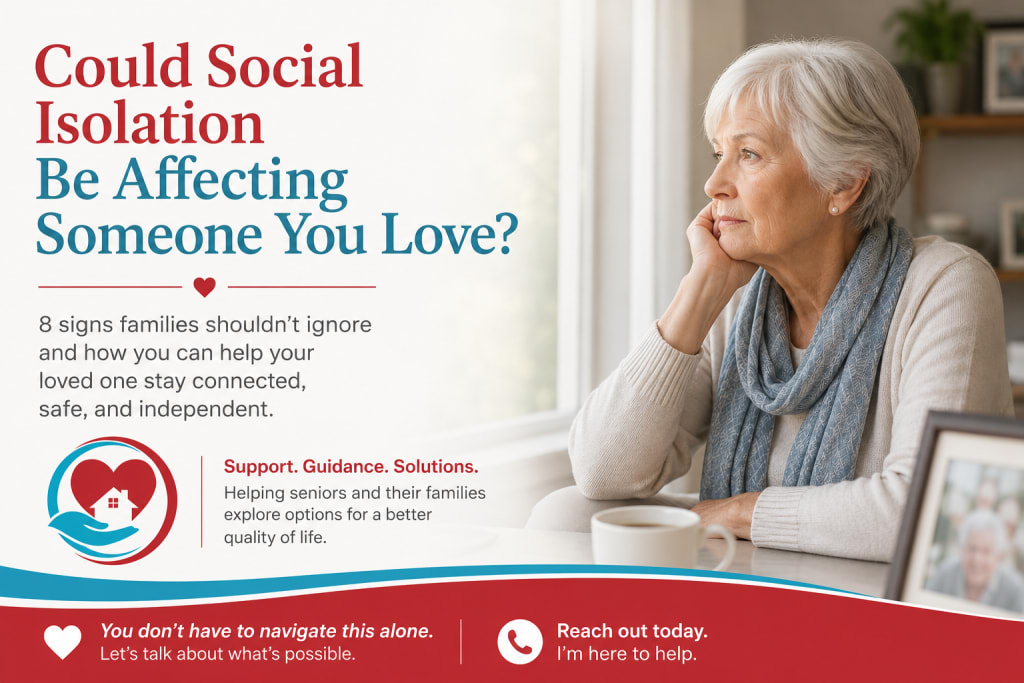
Could Social Isolation Be Affecting Someone You Love? 8 Signs Families Shouldn't Ignore
Growing older doesn't automatically mean becoming lonely.
Many older adults live vibrant, active, and fulfilling lives well into their retirement years. But for others, changes like retirement, the loss of a spouse, health challenges, or children moving away can quietly lead to social isolation.
The difficult part?
Social isolation often develops gradually. Families may not notice the warning signs until they become much more serious.
In fact, researchers have found that prolonged loneliness and social isolation can affect both physical and mental health, increasing the risk of depression, cognitive decline, heart disease, and other health concerns. Older adults who stay socially connected generally enjoy better overall health and quality of life.
The good news is that recognizing the signs early can make all the difference.
8 Signs an Older Adult May Be Becoming Socially Isolated
1. They rarely leave the house
Someone who once enjoyed shopping, church, lunches with friends, golf, volunteering, or community events may suddenly prefer staying home almost all the time. While everyone enjoys quiet days occasionally, consistently avoiding social activities may signal something deeper.
2. Their home seems to be changing
Have you noticed:
- More clutter than usual
- Unopened mail
- Yard work being neglected
- Small repairs piling up
- Housekeeping becoming difficult
Sometimes these changes aren't because someone "doesn't care." They may simply feel overwhelmed or lack the motivation or energy to keep up with everything.
3. They stop participating in activities they once loved
Many isolated seniors slowly give up hobbies they once enjoyed.
Maybe they no longer attend their book club.
They stopped playing cards.
They've quit volunteering.
Or they simply say,
"I just don't feel like going anymore."
4. They seem withdrawn during conversations
Family members often notice subtle personality changes first. Someone who was once outgoing may become quieter, less engaged, or less interested in conversations. Sometimes they simply don't have many opportunities to interact with others anymore.
5. They're relying on television as their primary companion
There's nothing wrong with enjoying television. But when the TV is on from morning until bedtime every day because there are few other social interactions, it can be a sign that loneliness is replacing meaningful connection.
6. Personal care begins to decline
Changes in appearance aren't always due to physical limitations. Sometimes loneliness affects motivation.
You might notice:
- Less attention to grooming
- Wearing the same clothing repeatedly
- Poor nutrition
- Missed medications
These changes deserve compassion—not criticism.
7. They make comments about being a burden
Pay attention to statements like:
- "I don't want to bother anyone."
- "Everyone is busy."
- "I'm fine."
While those words may sound harmless, they can sometimes mask feelings of loneliness or isolation.
8. They seem less happy than they used to be
Social isolation doesn't always look like sadness.
Sometimes it appears as:
- Irritability
- Anxiety
- Lack of enthusiasm
- Forgetfulness
- Loss of confidence
These emotional changes are worth paying attention to, especially if they're new.
Staying Independent Doesn't Always Mean Staying Isolated!
One of the biggest misconceptions I hear is:
"As long as Mom or Dad can still live at home, everything is fine."
But independence is about much more than remaining in the same house.
It's about having opportunities to:
- Spend time with friends
- Stay physically active
- Participate in favorite hobbies
- Feel connected to a community
- Have transportation when needed
- Continue living with purpose
Sometimes those needs can absolutely be met while remaining at home. Other times, a different living situation may actually provide more independence, not less.
There Are More Options Than Most Families Realize!
If social isolation is becoming a concern, selling the home isn't automatically the answer.
Depending on the situation, families might consider:
- Bringing in companion or in-home care services
- Finding local senior centers and social programs
- Exploring transportation services
- Joining fitness or hobby groups designed for older adults
- Moving closer to children or grandchildren
- Downsizing to a home that's easier to maintain
- Exploring active adult (55+) communities
- Considering independent living communities that offer built-in social opportunities
Every family's situation is unique. The best solution is the one that supports both independence and quality of life.T
Sometimes the Best Conversation Isn't About Real Estate
As a Seniors Real Estate Specialist (SRES®), I've learned that some of the most important conversations I have with families have very little to do with buying or selling a home. Instead, they're about helping someone continue living a happy, safe, and connected life.
Sometimes that means finding ways to make staying at home more enjoyable and socially connected. Sometimes it means exploring housing options that provide new friendships, activities, and freedom from the responsibilities of maintaining a larger home. And sometimes families simply need someone who understands the options and can help them think through what's best—without pressure.
Not Sure Where to Start?
If you're wondering whether a parent—or even you—might benefit from exploring ways to stay more connected, I'd be happy to help.
Whether it's discussing local senior resources, talking through housing options, or simply having a conversation about what might improve quality of life, I'm always happy to be a resource.
Sometimes one conversation can open the door to possibilities you didn't even know existed.
If you'd like to talk through your situation, I'd be honored to be a resource for you. Whether the best path is remaining comfortably at home, exploring a move, or simply finding ways to build more social connection and support, I'll help you navigate the options with care—without pressure. Over the years, I've built a trusted network of local professionals, senior resources, and community connections, and I'm always happy to share them if they can make life a little easier for you or someone you love.